Time, Speed, and Improvisation: Making Under Pressure at Art for All
Part 3 of 4 in the Beneath the Surface series | ← Previous: Part 2 | Next: Part 4 →
The Art for All festival demanded an intense burst of creation. While I'm naturally quite prolific in the darkroom, often generating creative bursts with many prints in a session, this project pushed that approach to an entirely different level. In about a week, I shot two rolls of film at the mall, developed them, printed around 50 images, mordançaged my favorites, framed, and installed everything. The compressed timeline forced me to embrace risk, chance, and improvisation more deeply than usual.
Under Pressure: When Natural Energy Meets Necessity
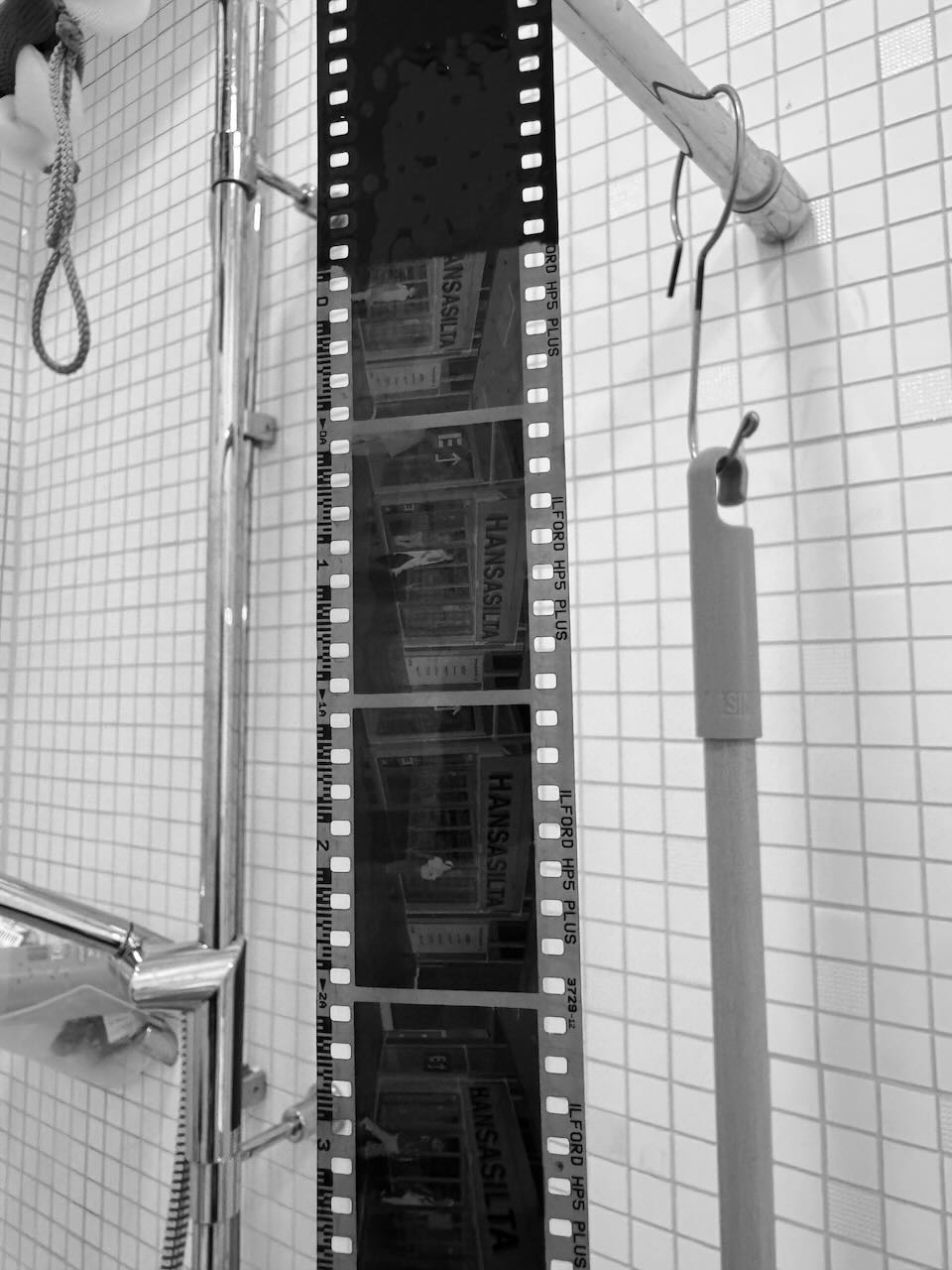
There's a reason “Under Pressure” feels like the perfect soundtrack to this experience—sometimes the most direct description is the most accurate. Working literally under pressure in a dead mall space, surrounded by empty storefronts and the remnants of consumer culture, I found myself collaborating with forces beyond my control: the unpredictable mordançage process, scavenged framing materials, impossible deadlines. Like Queen and Bowie's exploration of finding something beautiful despite crushing external forces, this project became about discovering what emerges when your natural creative process gets amplified by necessity.
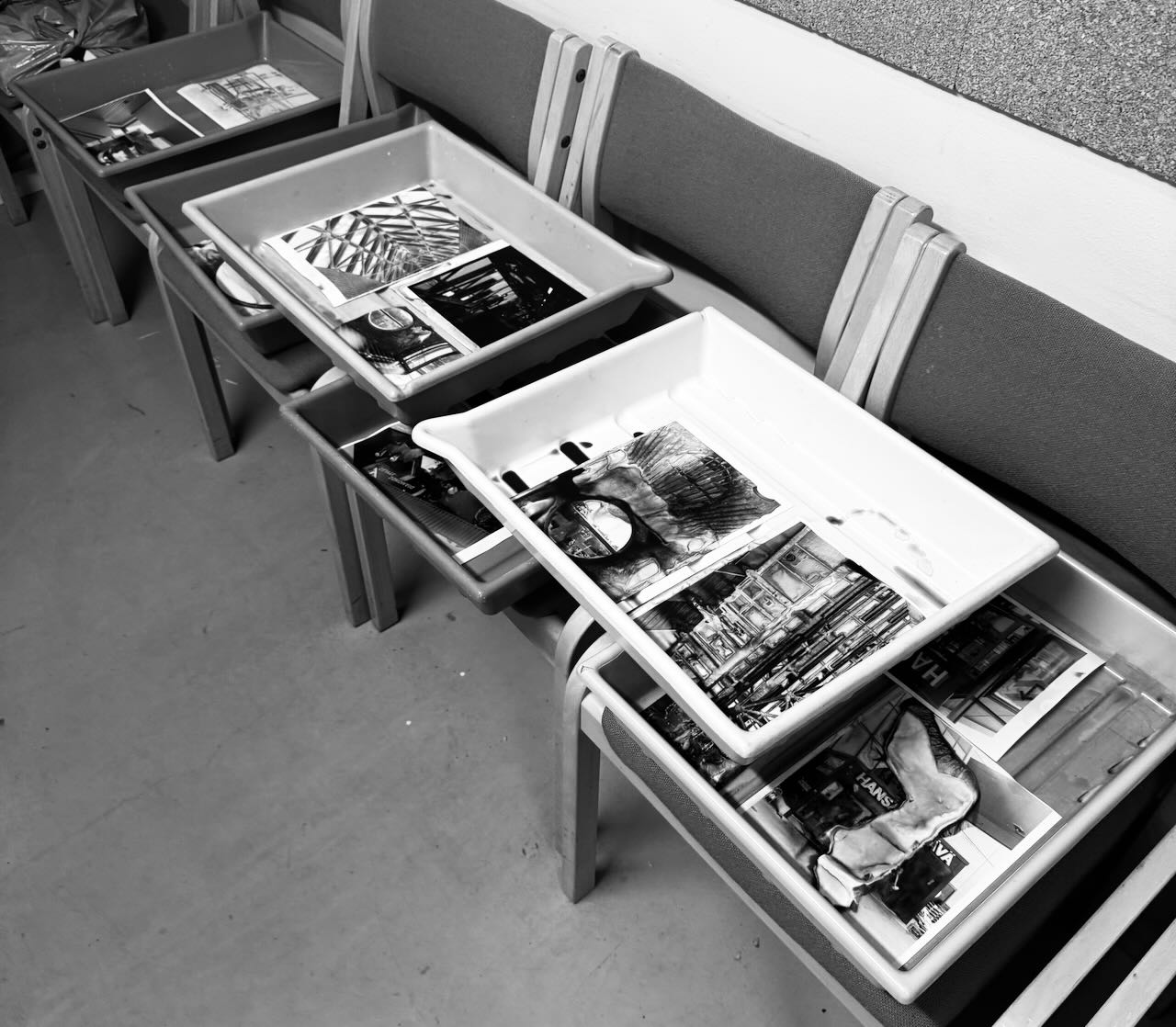
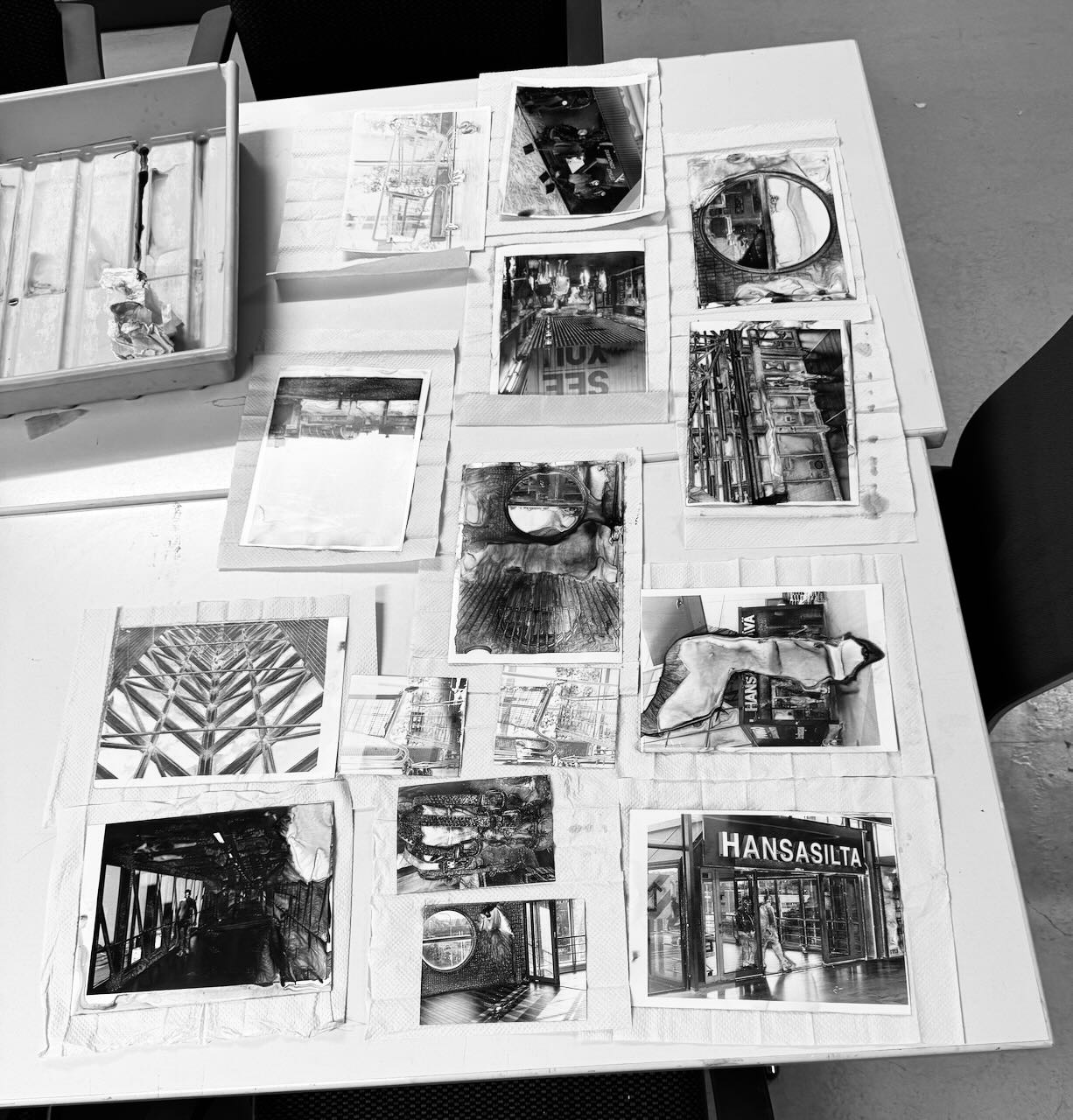
From just two rolls of film, I made about 50 prints—far beyond my usual experimental bursts. This volume served multiple purposes: selecting favorites, ensuring I had backups for additional mordançage treatments if needed, but most importantly, it allowed the narrative to emerge organically during the printing process itself. I was discovering what the images were trying to say as I worked, understanding which ones wanted to be paired together, how different treatments might serve the evolving story. About 20 prints ultimately received the slow, careful mordançage treatment, chosen not just for their individual merit but for how they contributed to the larger conversation happening across the room.
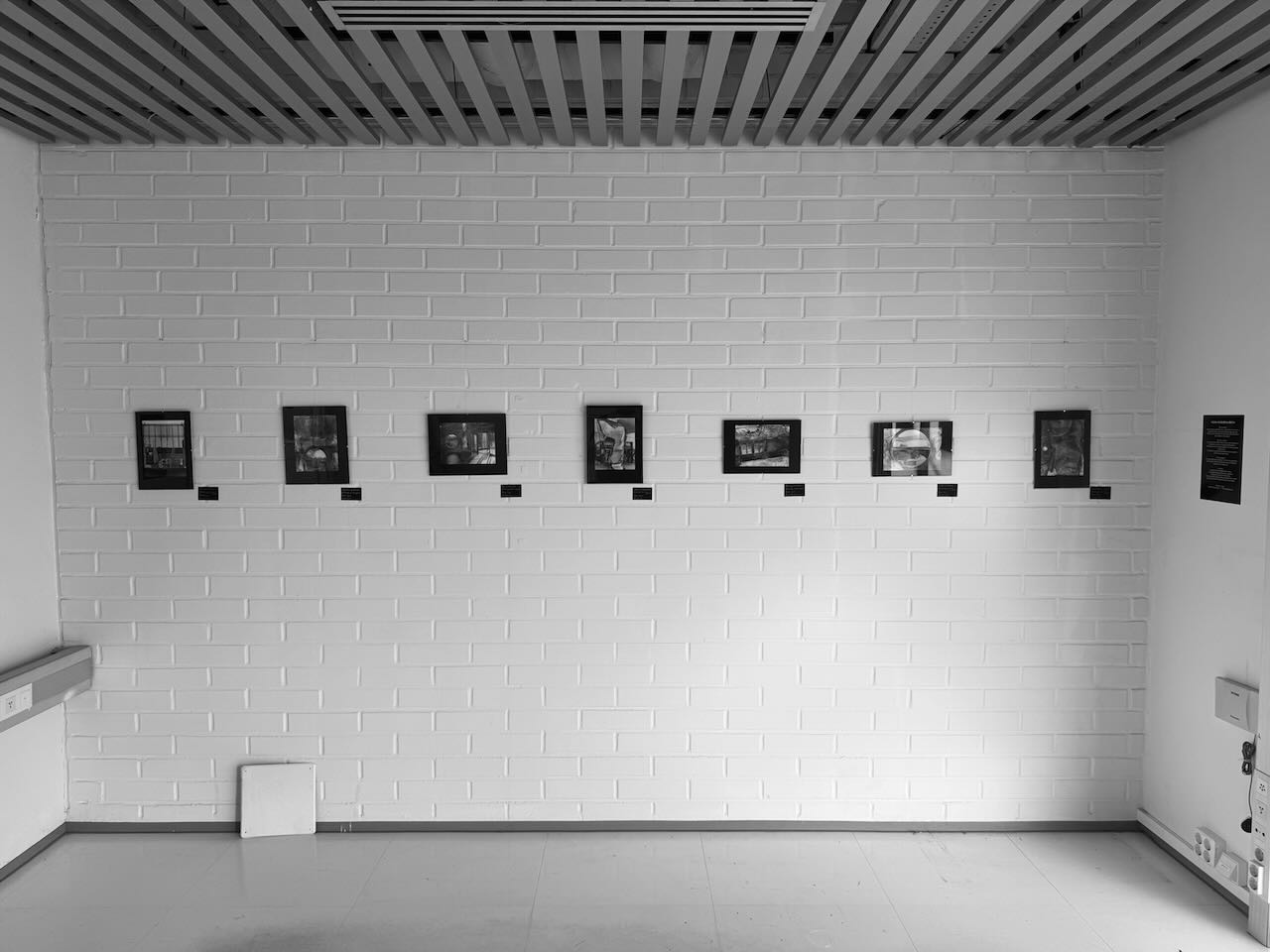
The “people on streets” weren't shoppers anymore, but the traces of lives and commerce embedded in the spaces I was photographing, while I raced to transform those images into something that could activate an entire room with roughly 20 works—about 10 on the walls and 10 more on tables.
Photographys Demand for Presence
Paintings often hold a commanding presence, able to fill and define a space with just a few well-chosen works. Their scale and texture invite contemplation in a way that feels expansive and complete. Photography, by contrast, usually calls for a denser rhythm of images, especially in digital contexts, where the expectation is often for a broader narrative constructed through volume and sequence. A sparse arrangement risks feeling unfinished or tentative.
Mordançage straddles these worlds. Each print requires multiple, painstaking steps—developing film, drying, contact sheets, printing, mordançage, drying again, framing, and installation. This layered, physical process demands time and care that digital printing does not. Looking back, it almost feels astonishing that I produced nearly 50 prints in such limited time. Meeting this scale—and the deadline—was daunting, yet drove a creative momentum that became central to the work's identity.
The Clock as Creative Catalyst
The pressure of the deadline pressed down heavily—echoing the song's opening: “Pressure pushing down on me, pressing down on you.”
Working with analog materials under such constraints altered my usual working rhythm. There was little room to pause or second-guess. Mistakes shifted from obstacles into opportunities—sometimes embraced, sometimes repurposed. Time itself became a tactile element influencing the work's visual and conceptual makeup.
Improvisation as Survival
Without access to ideal conditions or my usual tools, improvisation became essential rather than optional. I worked with prints still drying, makeshift framing materials, and challenging exhibition lighting. There was literally one frame that had a large chip in it—but you know what? It worked. The physical vulnerability of the frame mirrored the vulnerability I was exploring through mordançage itself, becoming another layer in the work's meditation on damage and transformation.
The pressure in the moment echoed the song's desperate plea: “Why can't we give ourselves one more chance?” It pushed me to keep adapting, to experiment, and to trust intuition over perfection. The constraints didn't just shape the work—they became part of its story, deepening the themes of vulnerability and transformation inherent in mordançage.
Contrasting Speed and Contemplation
Though I regularly embrace experimental surges with multiple prints, this project's scale and pace brought a new level of intensity. Compared with more measured projects like Quantum Mordançage, this sprint generated a raw urgency and immediacy that can't be planned or replicated. The pressure forged a distinct kind of honesty in the work—one shaped by speed and necessity rather than prolonged refinement. There's something almost quantum mechanical about it: rapid decision-making collapsing creative possibilities into definite outcomes, while slower processes allow multiple paths to remain open until the moment of selection.
Lessons Learned and Looking Forward
This experience showed me that time isn't just a limitation—it's a creative force in its own right, shaping both the material and conceptual fabric of art. Improvisation emerged not as a fallback but as a powerful method of discovery and fresh insight. The project embodied the tension at the heart of “Under Pressure”: finding grace and meaning despite impossible circumstances, creating something lasting while racing against the clock in spaces abandoned by commerce.
Moving forward, I'm excited to explore how this tension between speed and contemplation, between natural creative momentum and external pressure, continues to inform my work. The dead mall may have been empty of shoppers, but it was full of creative possibility—a space where pressure and improvisation transformed constraint into breakthrough. Sometimes the most direct path to discovery is through the crucible of impossible deadlines and imperfect materials, where the only option is to trust the process and let the work become what it needs to be.