Beneath the Surface: Mordançage Prints for Art for All
Part 1 of 3 in the Beneath the Surface series | Next: Part 2 →
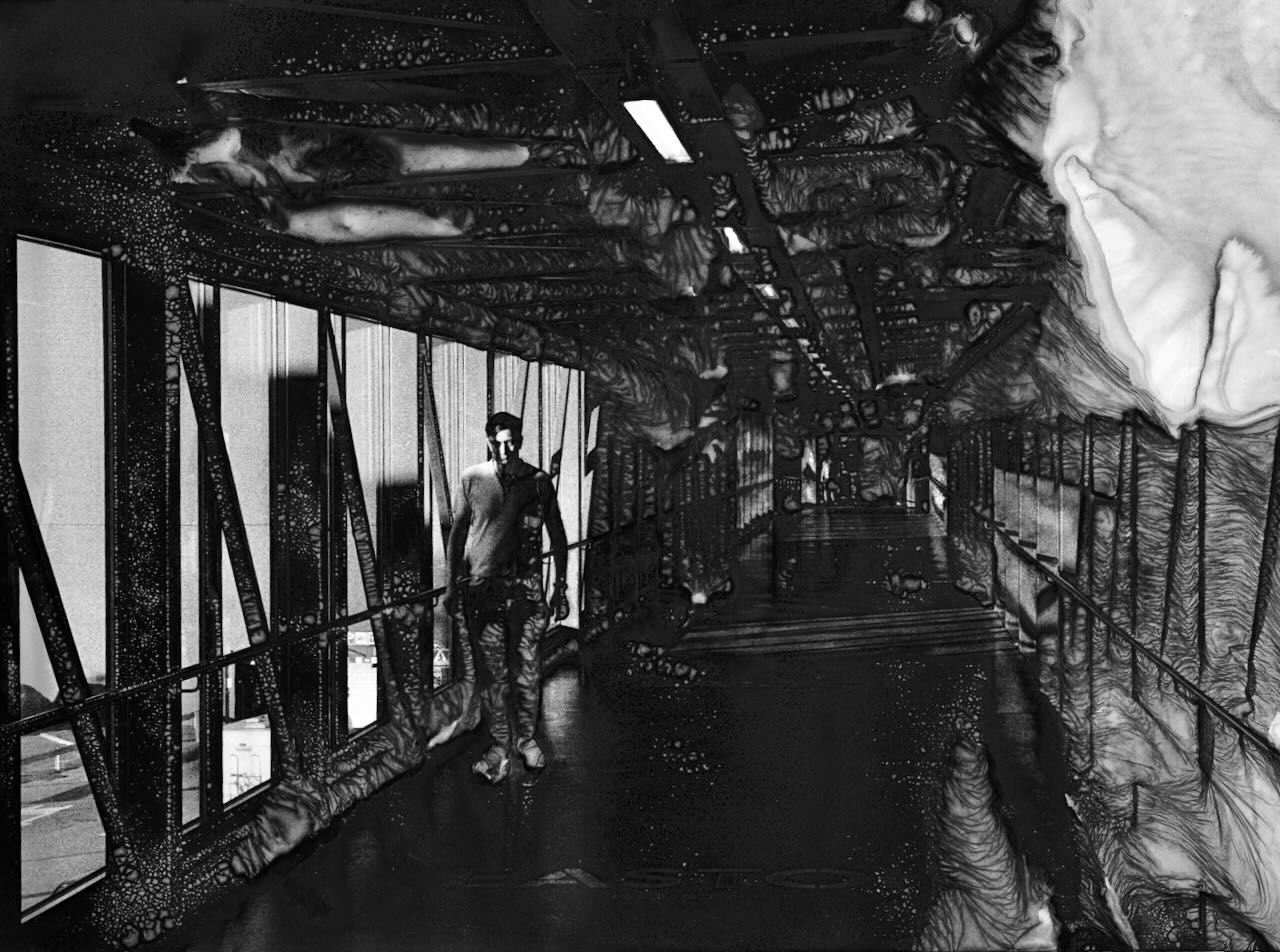
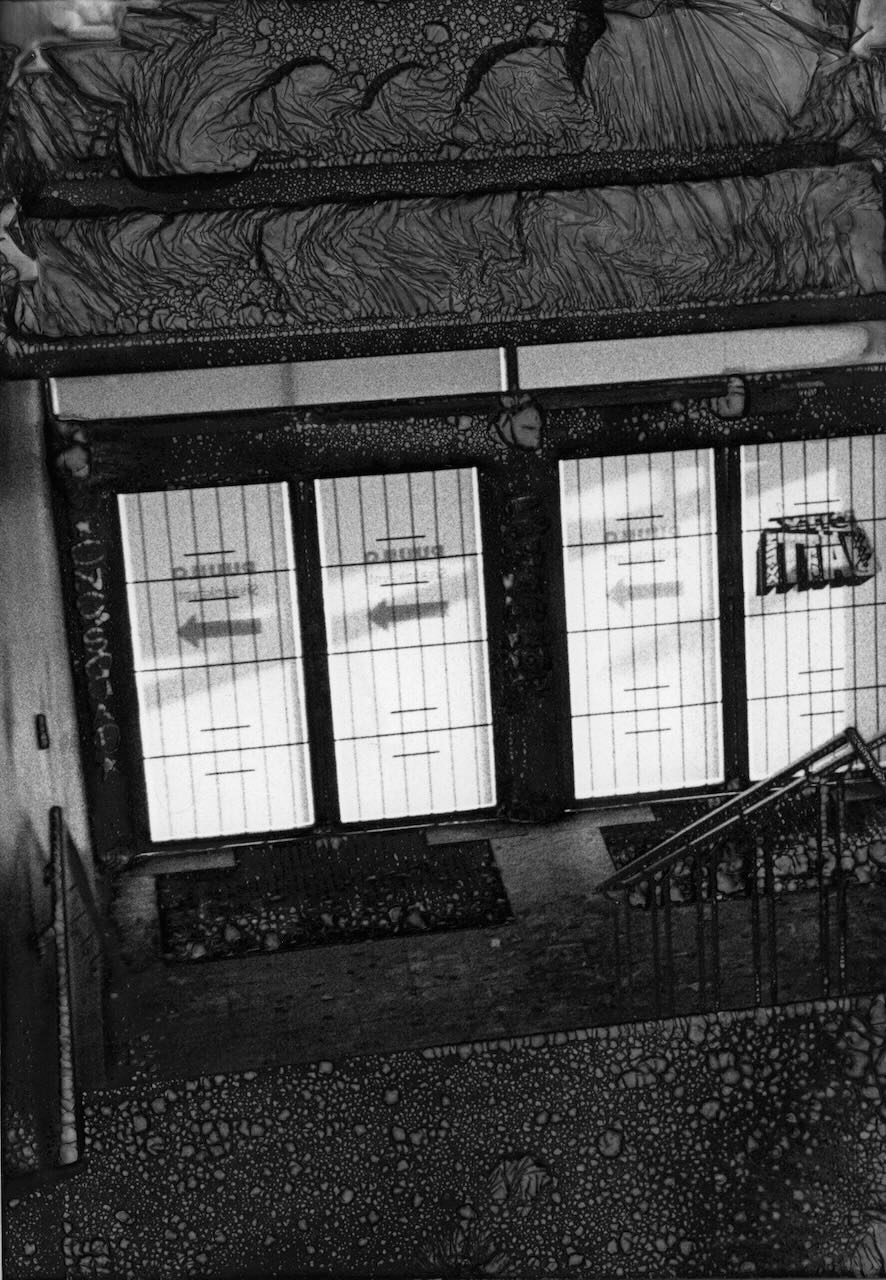
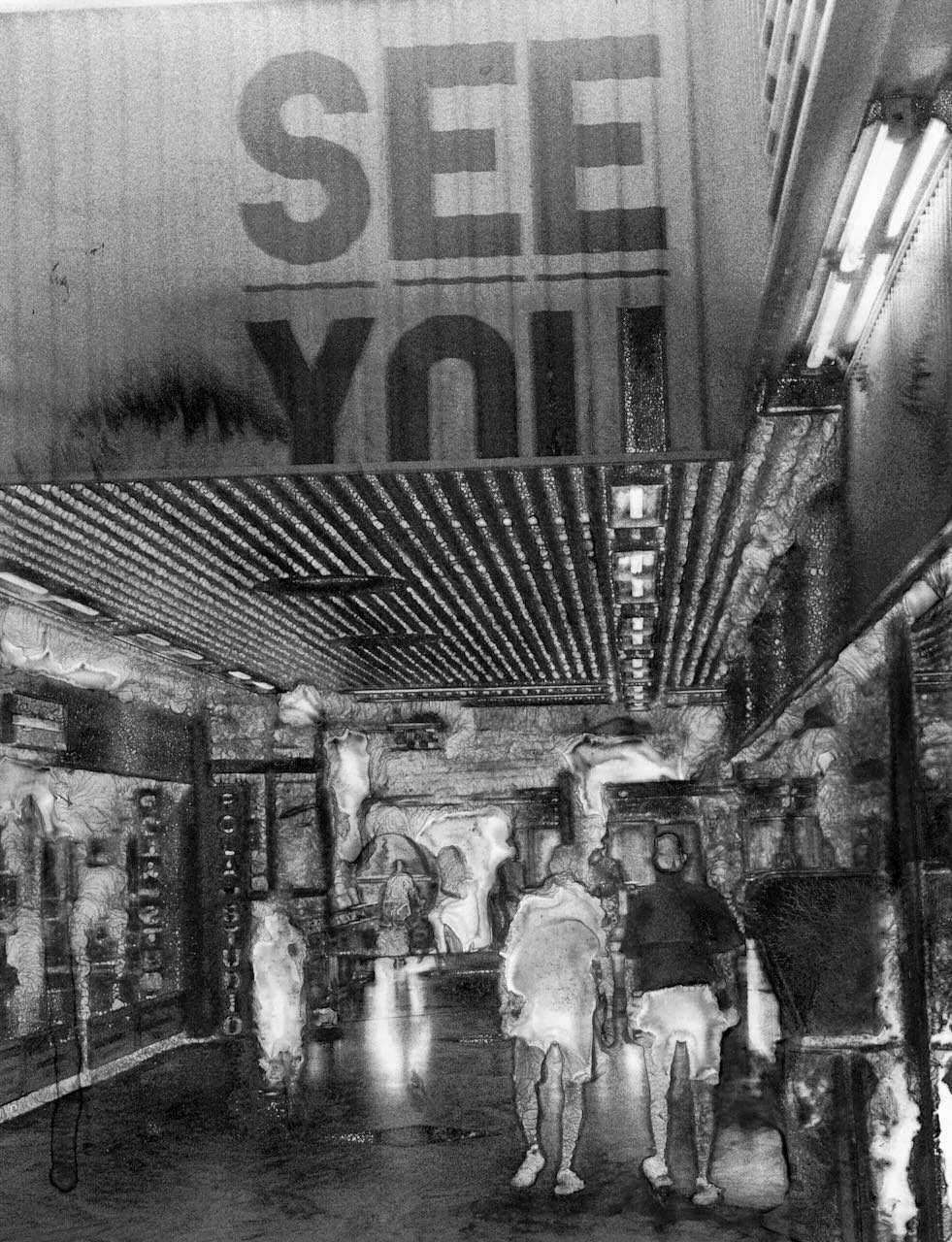
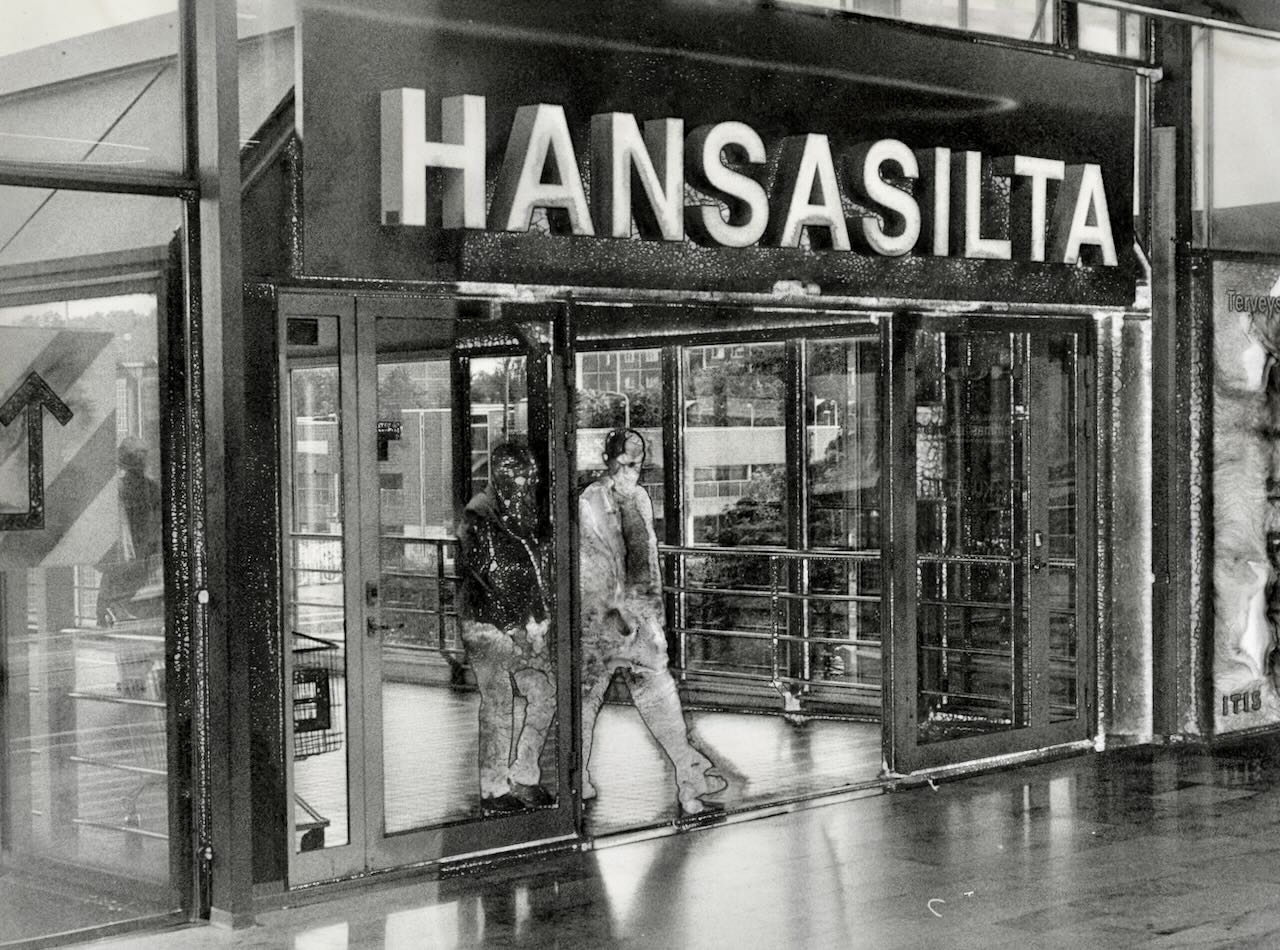
Exhibiting fragile, alternative darkroom prints in a bustling shopping mall is a kind of quiet subversion. For Art for All’s “Success & Glory” festival at Easton Hansakäytävä, I set out to create photographs of the mall itself—its passageways, materials, overlooked corners—and transform those images using mordançage, a process that destabilizes photographic surface and exposes hidden structure.
The One-Week Challenge
The schedule was ruthless: shoot, develop, mordançage, frame, and hang, all within days. Camera work and all chemical processing happened at Kameraseura’s darkroom, which became the site of every transformation and experiment. There was no magic shortcut for fragile processes—each wet, unpredictable print was finished, dried, and only then transported for installation.
Making With Found and Local Materials
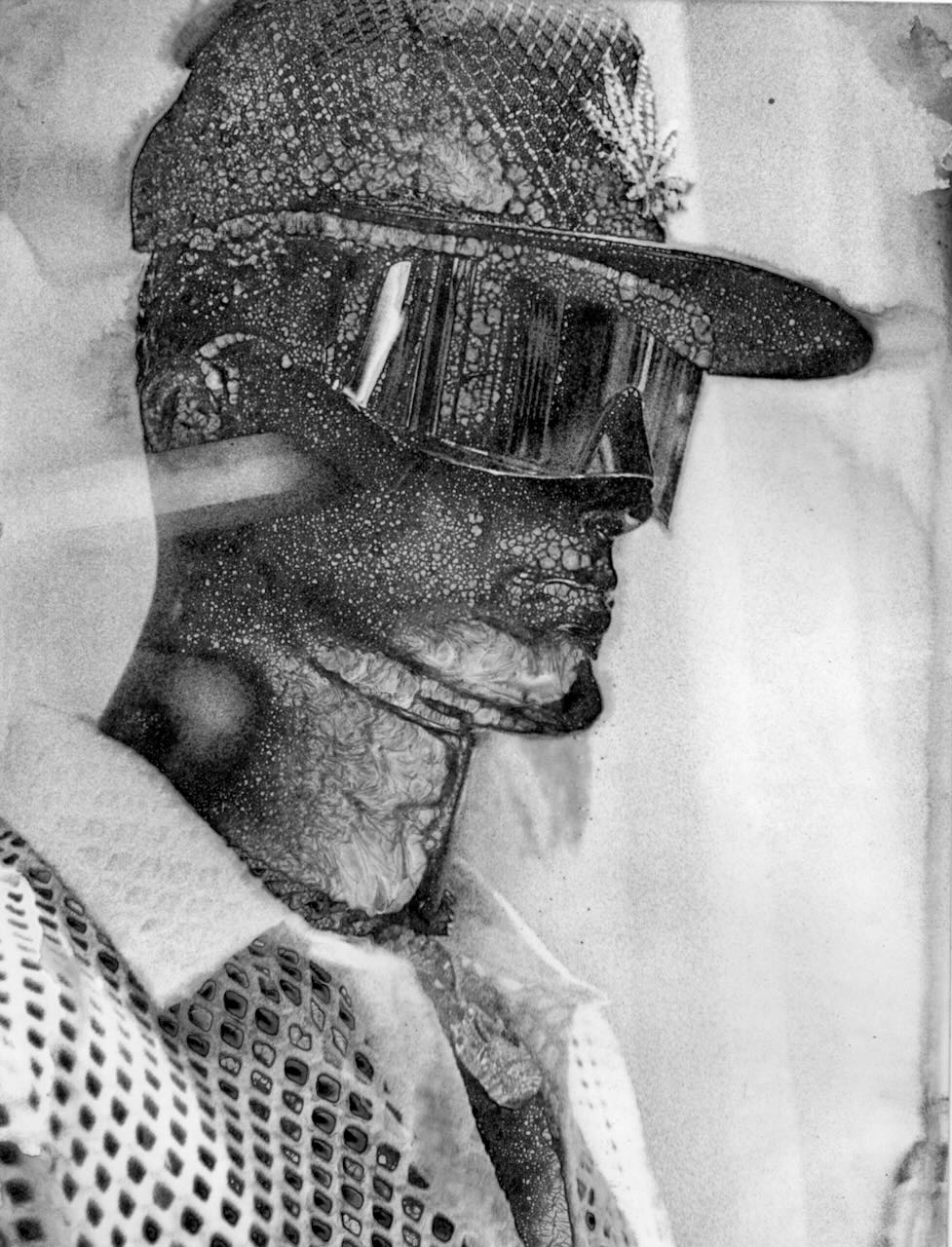
Frames were sourced from the local SPR Kontti, Finnish Red Cross’s thrift outlet, while passepartouts, fishing wire, nails, pins for hanging, and paper for labels came from nearby stores in the mall. And yes, powering through this frenzied week required serious fuel—a heartfelt shout-out to the awesome matcha from Matcha Crew, which kept the caffeine jitters just about balanced with zen calm. Definitely the unofficial elixir of mordançage marathons.
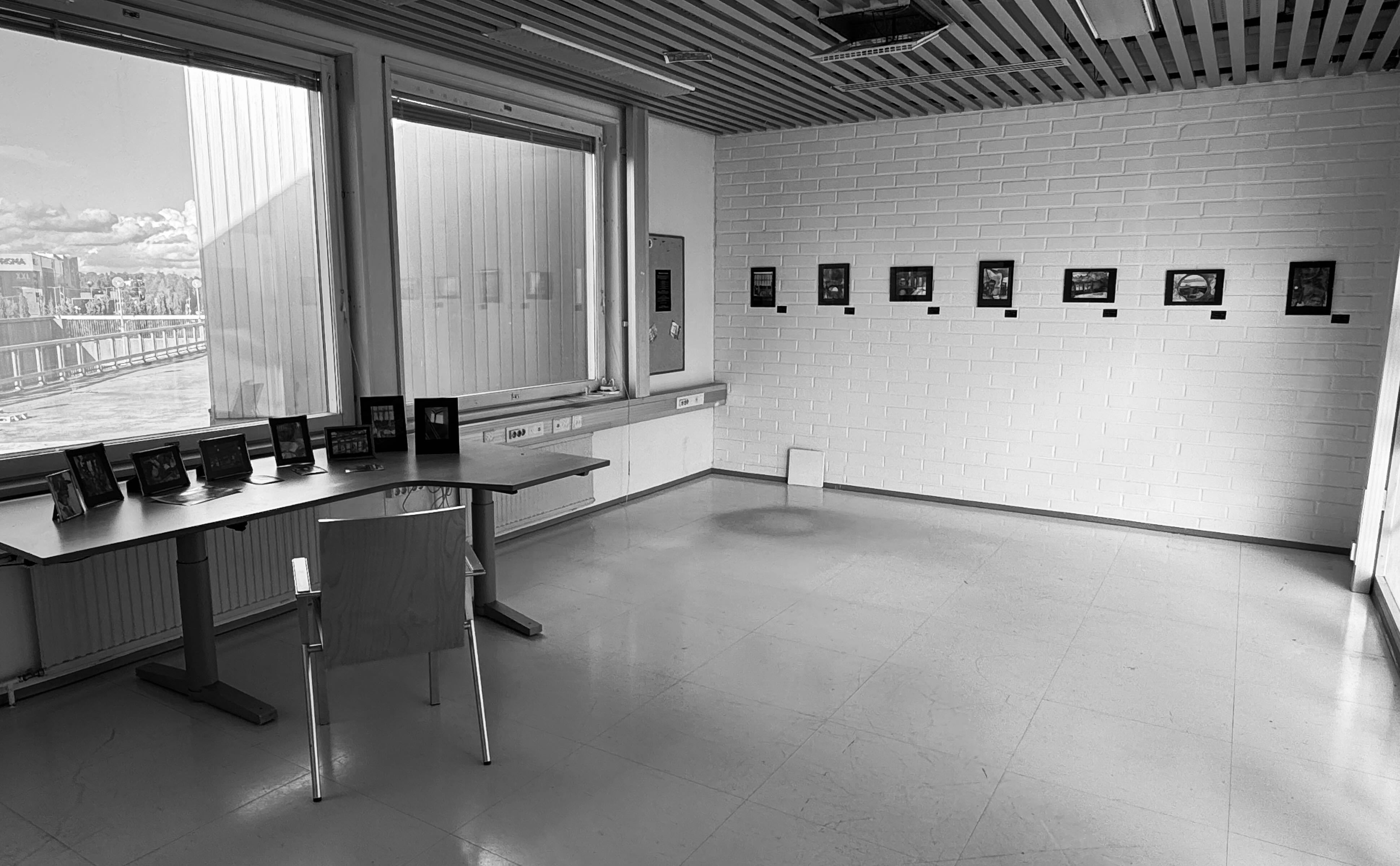
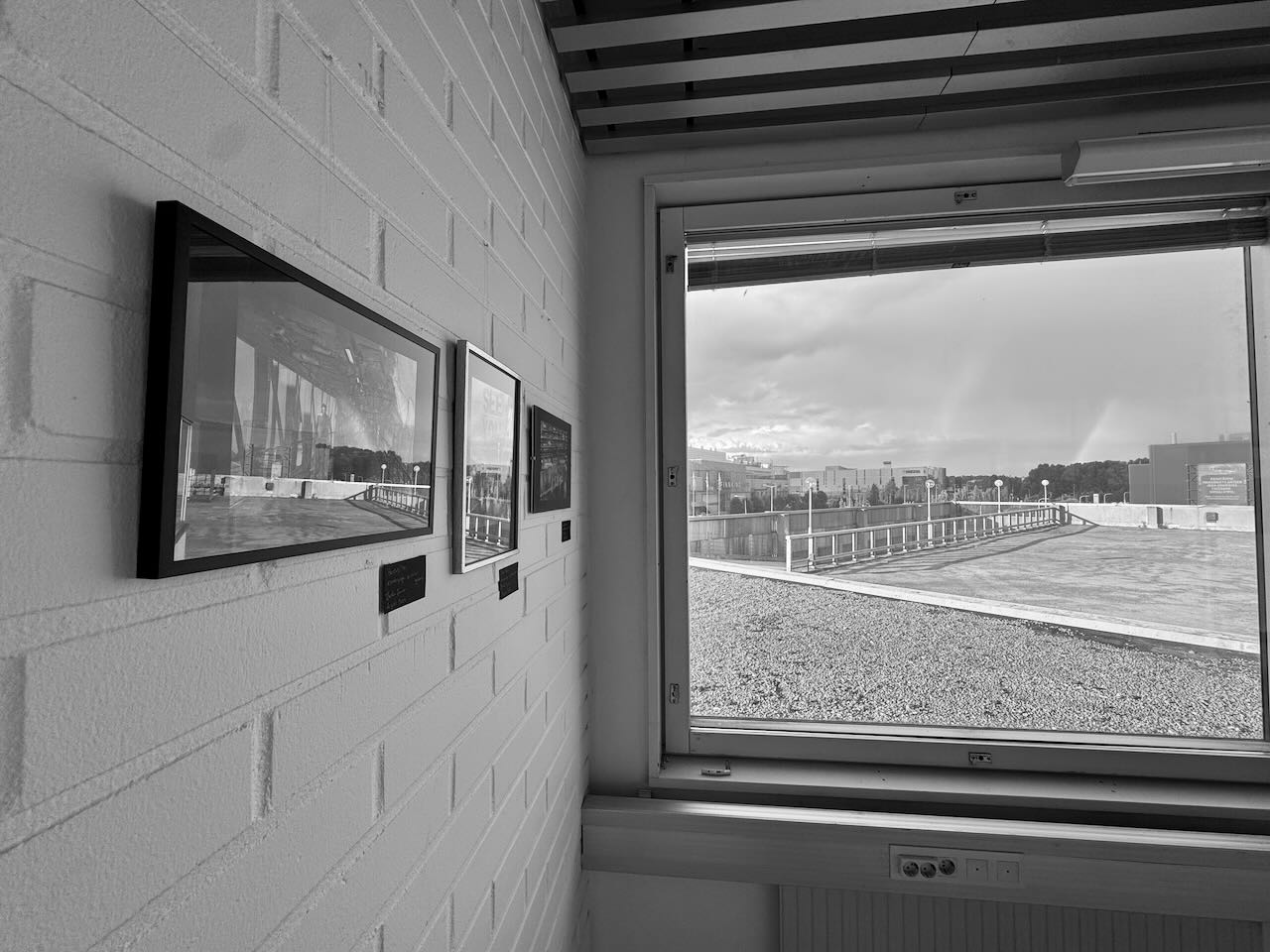
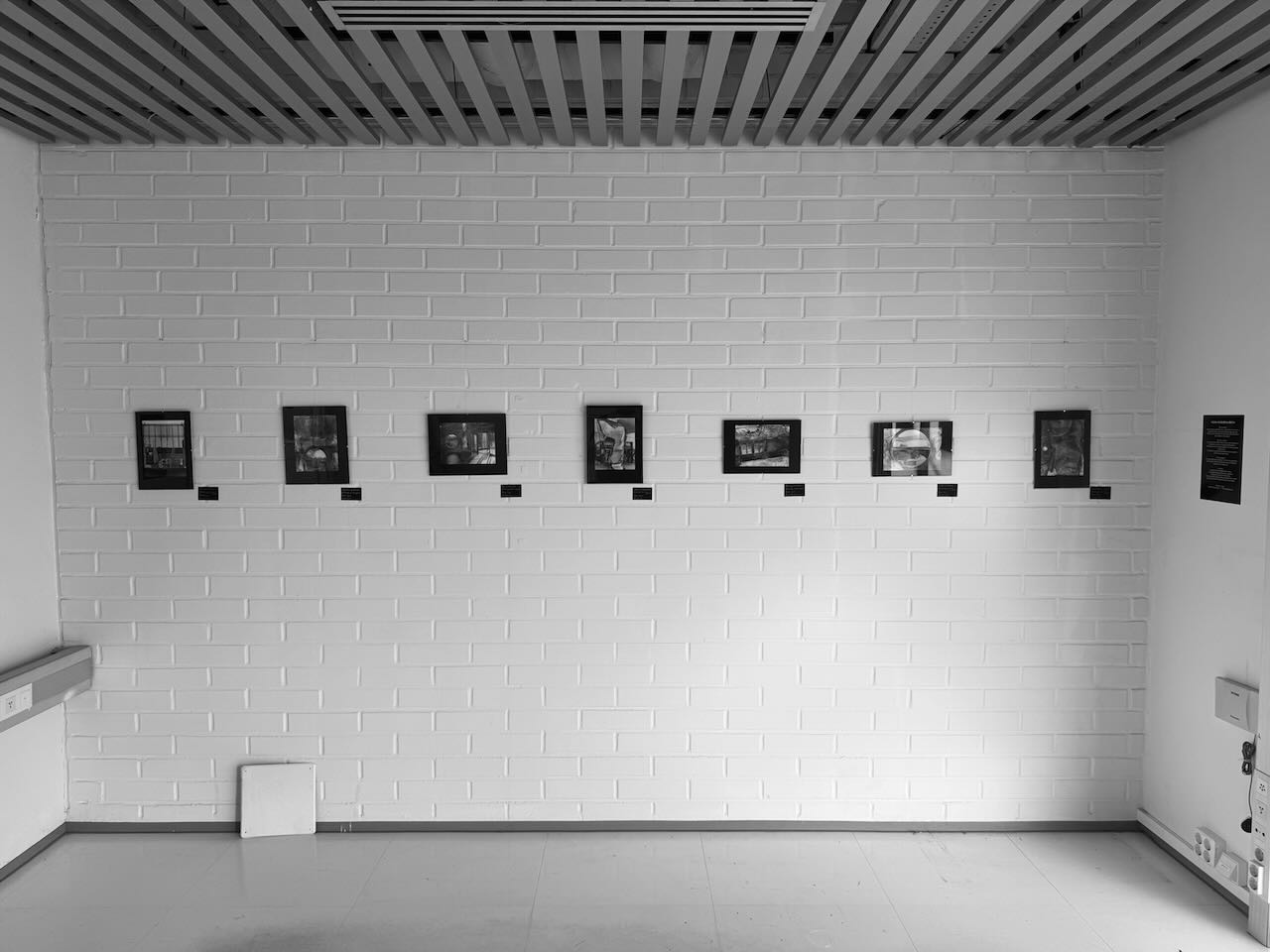
The exhibition took place in an old office space within Easton mall, which reportedly once served as a book club discussion room. Apparently, people used to gather there to debate books at length—though nowadays, who even reads anymore? Maybe the room awaits its quiet resurrection by new readers or perhaps just naps.
Mordançage Process
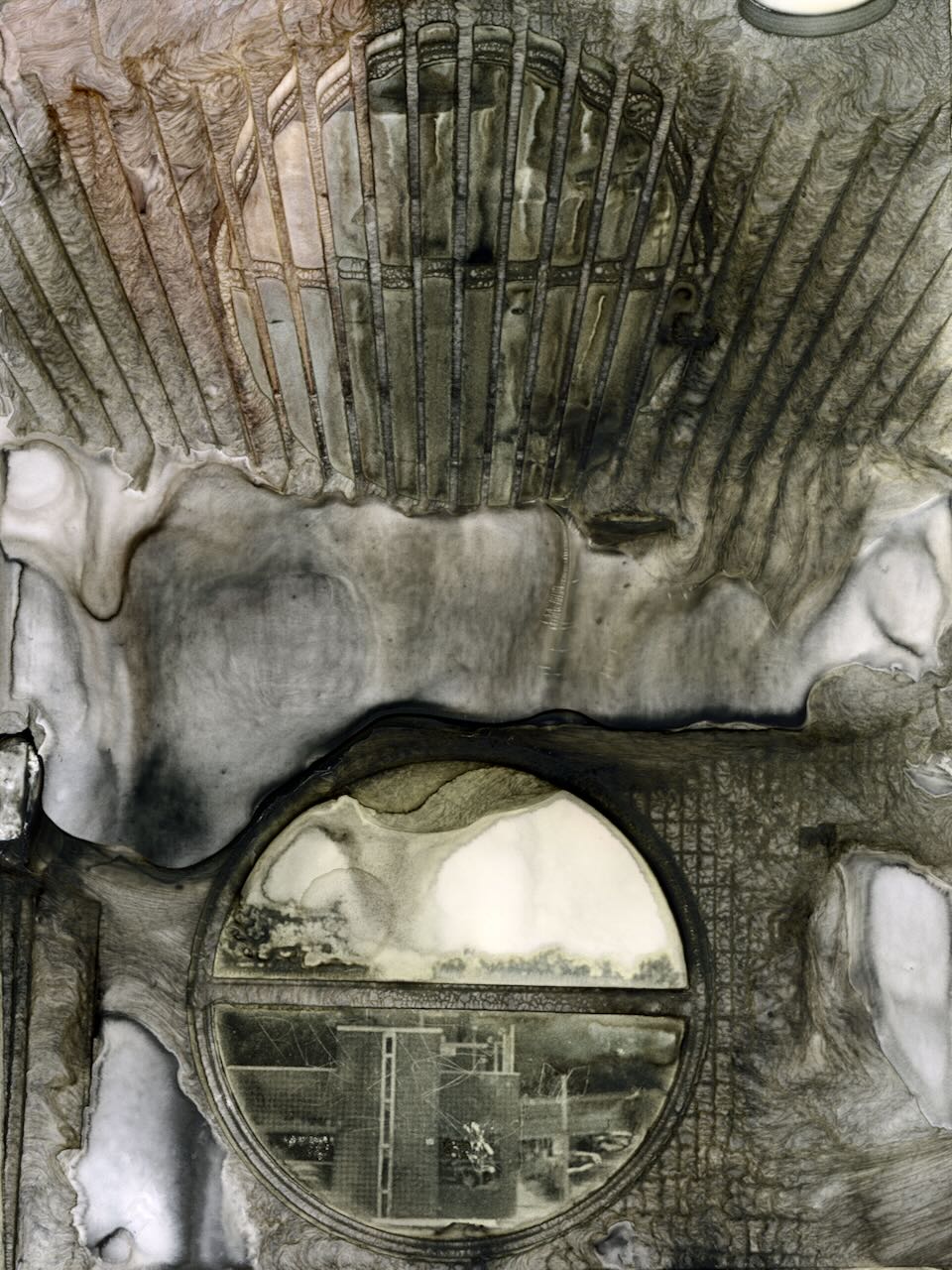
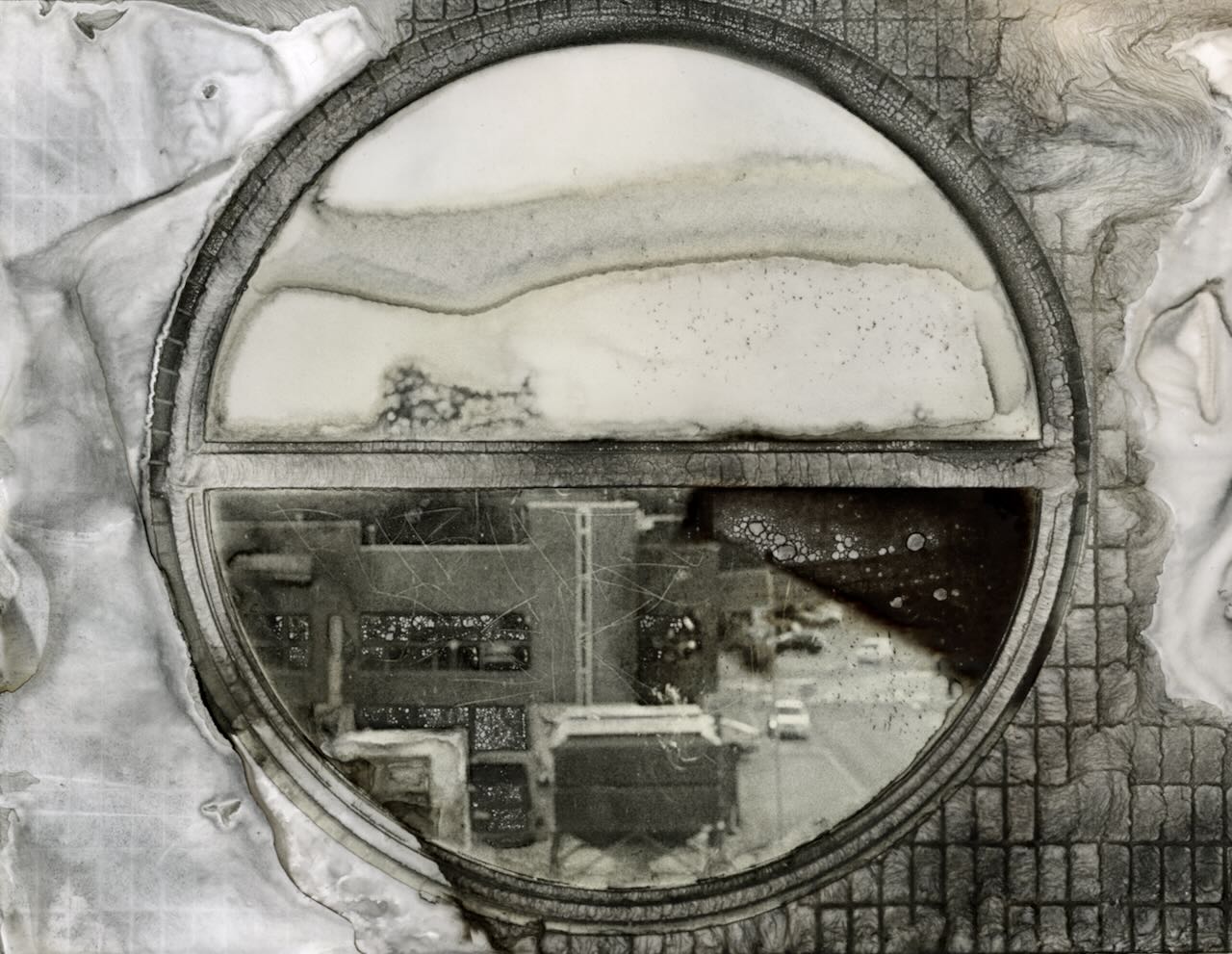
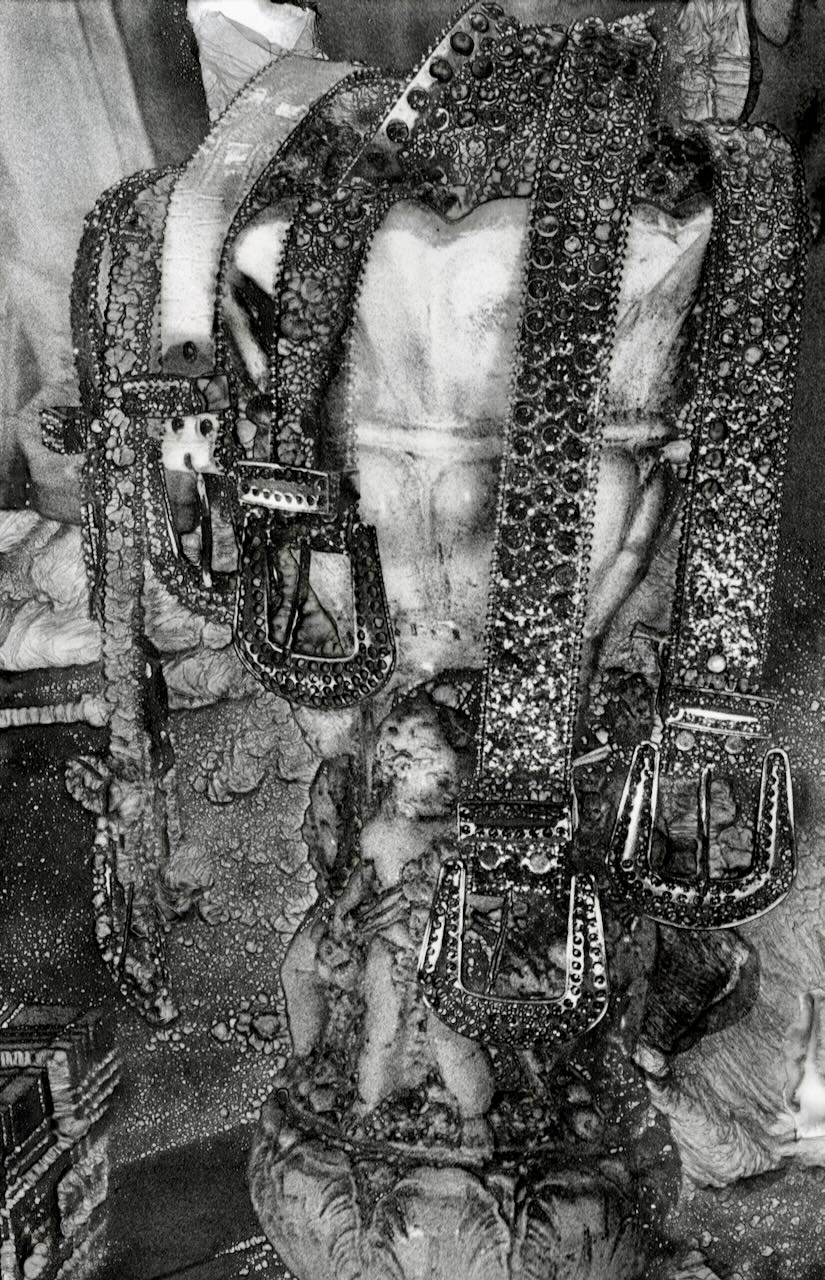
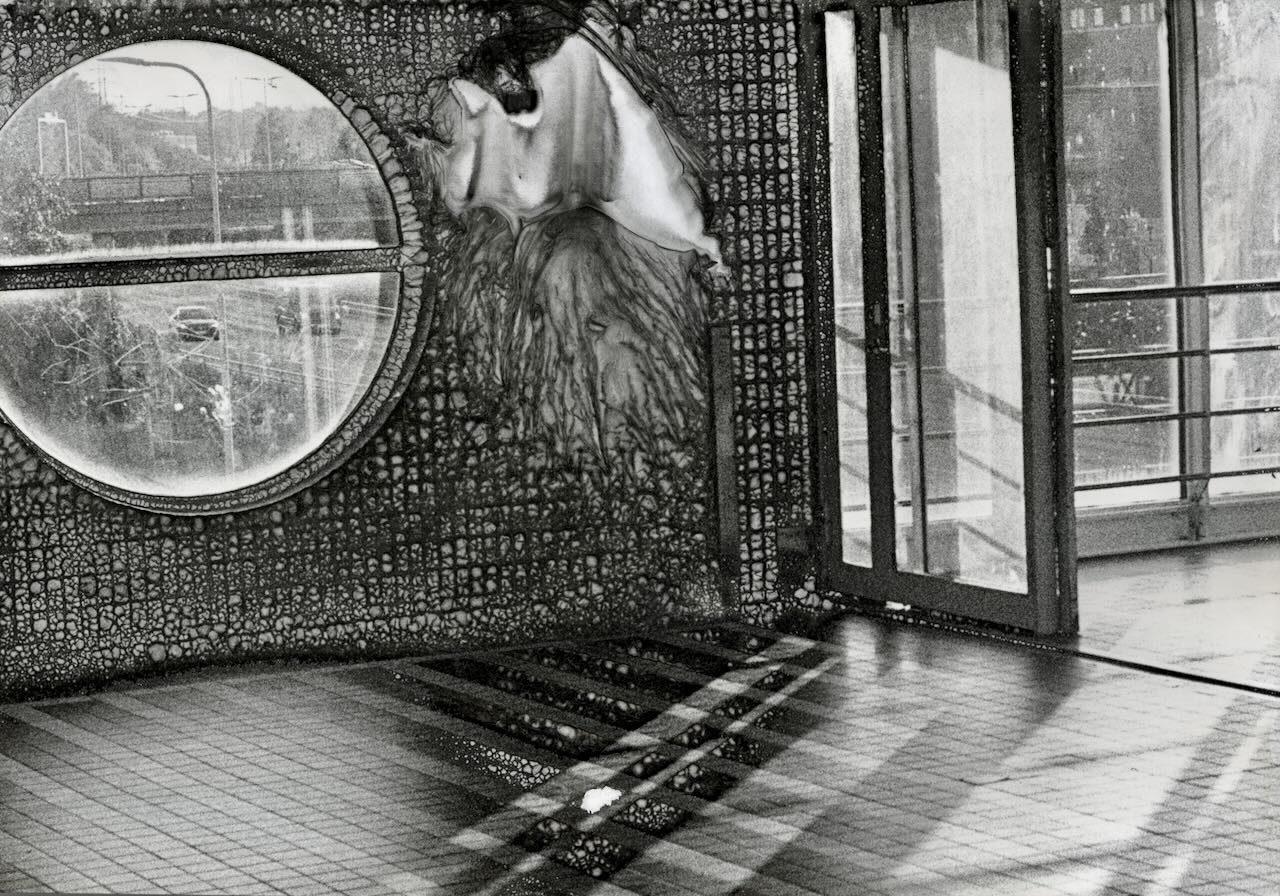
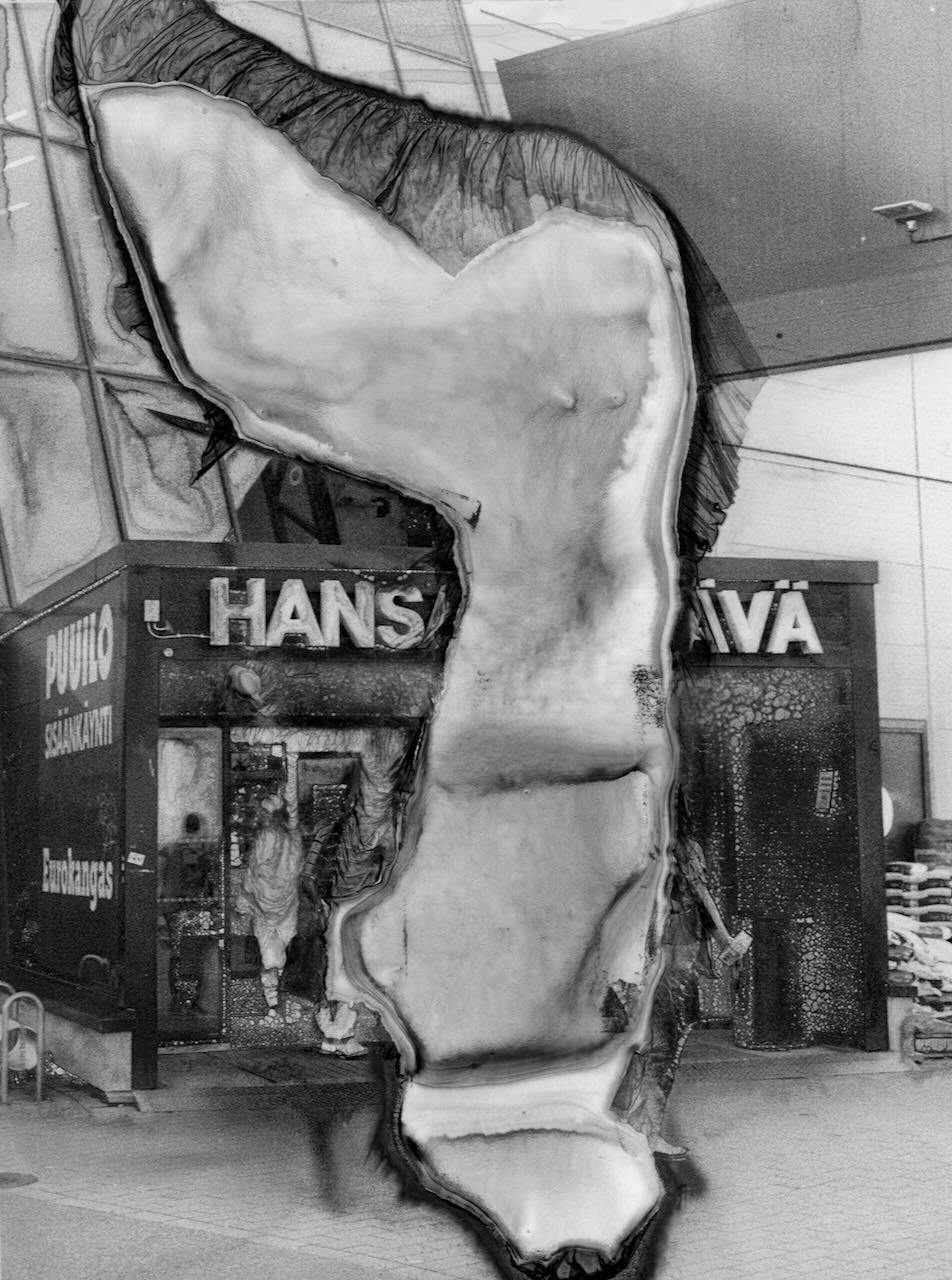
Mordançage is violent, physical, and layered. Prints go into a bath of copper chloride, acid, and hydrogen peroxide; the emulsion lifts, veils, and buckles, distorting the original image. Photographs taken of crisp architectural detail became tactile artifacts: ambiguous, unstable, and irreproducible. The process mirrored the theme—what lies beneath the glossy surface can only be revealed through disruption.
Installation Process and Challenges
Installing delicate mordançage prints in a mall setting came with its own unique hurdles. Unlike a darkroom or professional gallery, I had no access to standard framing tools or ideal materials. For instance, a cardboard box doubled as a cutting board since I lacked a proper self-healing mat. Passepartout cutting relied on a simple craft knife found at a hardware store, and there were no leveling devices to ensure perfectly straight hangs.
The time pressure made things even more intense—some prints were still drying when framing began, demanding speed over precision. The whole process required constant improvisation, balancing care for fragile prints with the reality of limited tools, materials, and time. This constraint-driven creativity became part of the exhibition’s spirit, mirroring the themes of vulnerability and making do.
Diverse Presentations
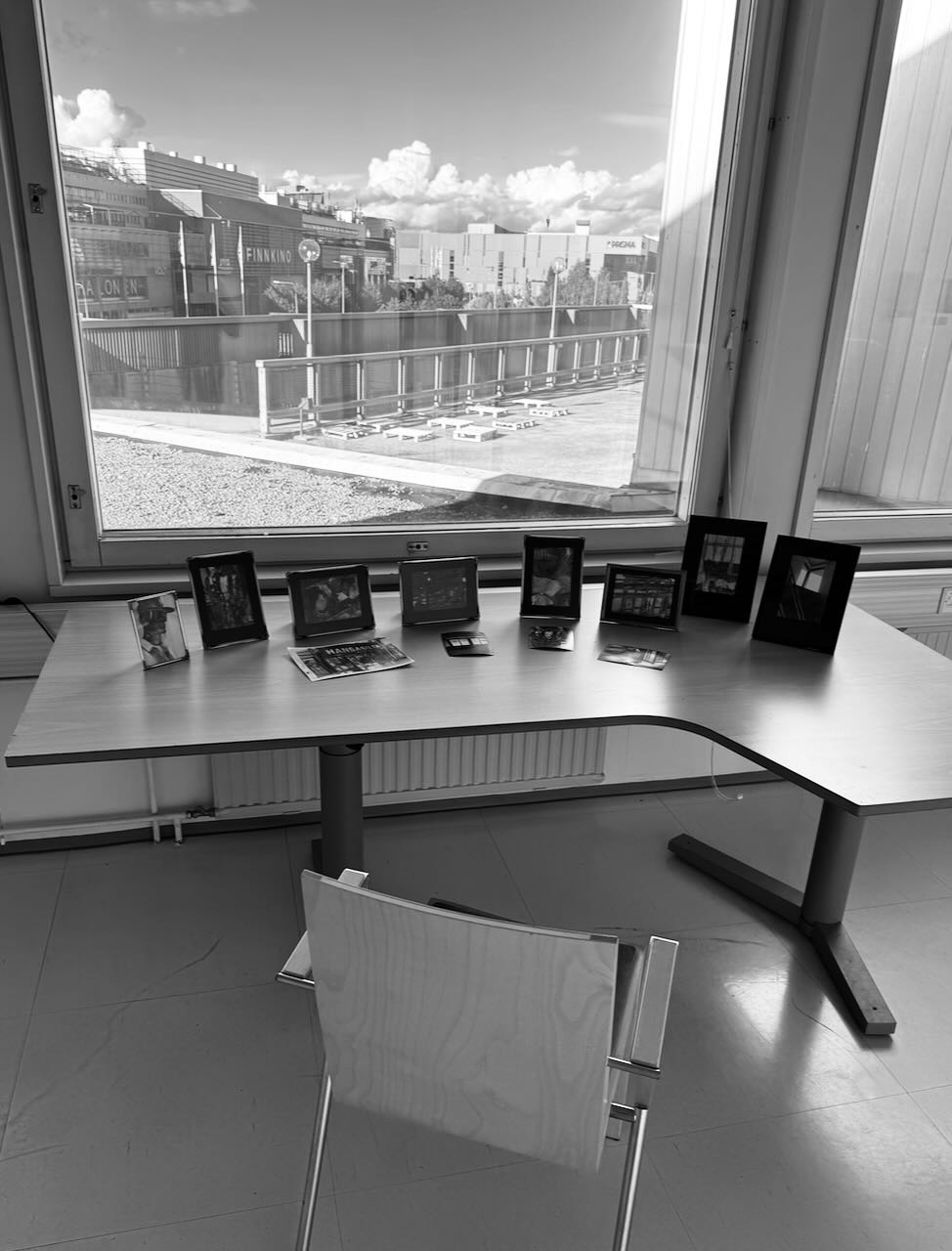
The exhibition displayed prints in several ways. Classic 8x10” framed prints hung on walls, commanding attention akin to formal portraits. Smaller 4x5 framed prints laid gently on a table evoked the intimacy of treasured family photos displayed on a mantelpiece—quiet invitations to personal engagement.
Unframed prints showcased alongside revealed the shimmering silver and textured lifts of emulsion without barriers, inviting viewers closer to the tactile materiality and process behind the images.
Visual Atmosphere and Mall Environment
The installation’s quiet fragility contrasted with the brisk commercial bustle of Easton. The exhibition unfolded inside a former office space, once a book club discussion room — a place of gathering and conversation, now transformed into a site for visual dialogue. The hum of shoppers and ordinary mall life filtered in, creating spontaneous moments of connection, with shifting reflections and textures brought alive in the unforgiving fluorescent lighting.
Large-format digital reproductions acted as bold invitations from the corridor, bringing visitors in. Additional digital prints inside highlighted how much detail and presence is lost in translation from physical print to high-res reproduction, silently commenting on themes of presence and absence.
Experiments with Display and Interaction
In addition to prints on walls and tables, I experimented with suspending photos on the ceiling—actually images captured as reflections on the mall corridor’s ceiling, a conceptual nod to surfaces above us often overlooked. Unfortunately, this subtle gesture went mostly unnoticed; very few visitors looked up. Perhaps placing a mirror would have helped draw eyes upward and completed the experience.
I also hoped visitors would naturally pick up and engage with the unframed prints laid out on tables, inviting a tactile, intimate encounter with the photographic material. Yet, most were far more comfortable handling the smaller framed 4x5” prints instead. This could be a reflection of cultural conditioning—people tend to perceive framed objects as ‘complete’ artworks and unframed photos as less formal or vulnerable, thus hesitating to touch.
Fortunately, as I was present during most of the festival, I could encourage and guide visitors towards more interactive appreciation, emphasizing the materiality and process behind the work. This approach aligns with the practice of artists like Daido Moriyama, who deliberately place unframed photos in exhibitions to explore how format influences viewers’ engagement.
Other contemporary artists also investigate how photographic format shapes viewer experience. For example, Klea McKenna’s textured photographic rubbings highlight physicality and touch, while makers like Chris McCaw and Meghann Riepenhoff create unique analog objects inviting intimate interaction. There is also a growing practice of tactile photography designed for multisensory engagement, especially for visually impaired audiences, which underlines that how photographs are presented profoundly affects how they are perceived and felt.
Observing these dynamics firsthand reaffirmed the power and complexity of format and materiality in shaping the dialogue between artwork and viewer.
Audience Interaction and Moments
One of the exhibition’s most rewarding aspects was observing visitor engagement. Some lingered before framed wall pieces with studied contemplation; others knelt closely by the table to appreciate smaller prints or to explore unframed works’ surfaces. These quiet exchanges created a dialogue between audience, artwork, and place.
Reflections: Between Surface and Space
This project was about bringing fragile, handmade prints—images born from a chemistry of disruption—into a place designed for commerce, movement, and routine. The white-walled office made it feel like a gallery, but it existed inside a larger world that had very different demands.
What stayed with me wasn’t how perfectly the exhibition fit or didn’t fit the space, but the moments where the boundaries blurred—the short pause of a passerby, the hesitant touch on an unframed print, the shifting light playing on buckled emulsions.
Maybe the real success of putting art like this in unexpected places isn’t about control or perfect presentation; it’s about creating opportunities for surprise and connection. About making room for the fragile, the imperfect, and the overlooked—both in photographs and in the spaces we inhabit.
Presented at Art for All ‘Success & Glory’ Festival, Easton Hansakäytävä, August 2025. All analog processing completed at Kameraseura darkroom. Thanks to the festival curators, local shops, mall staff, and fellow artists for improvisational creativity and materials, and for the many visitors during the festival.
Gallery